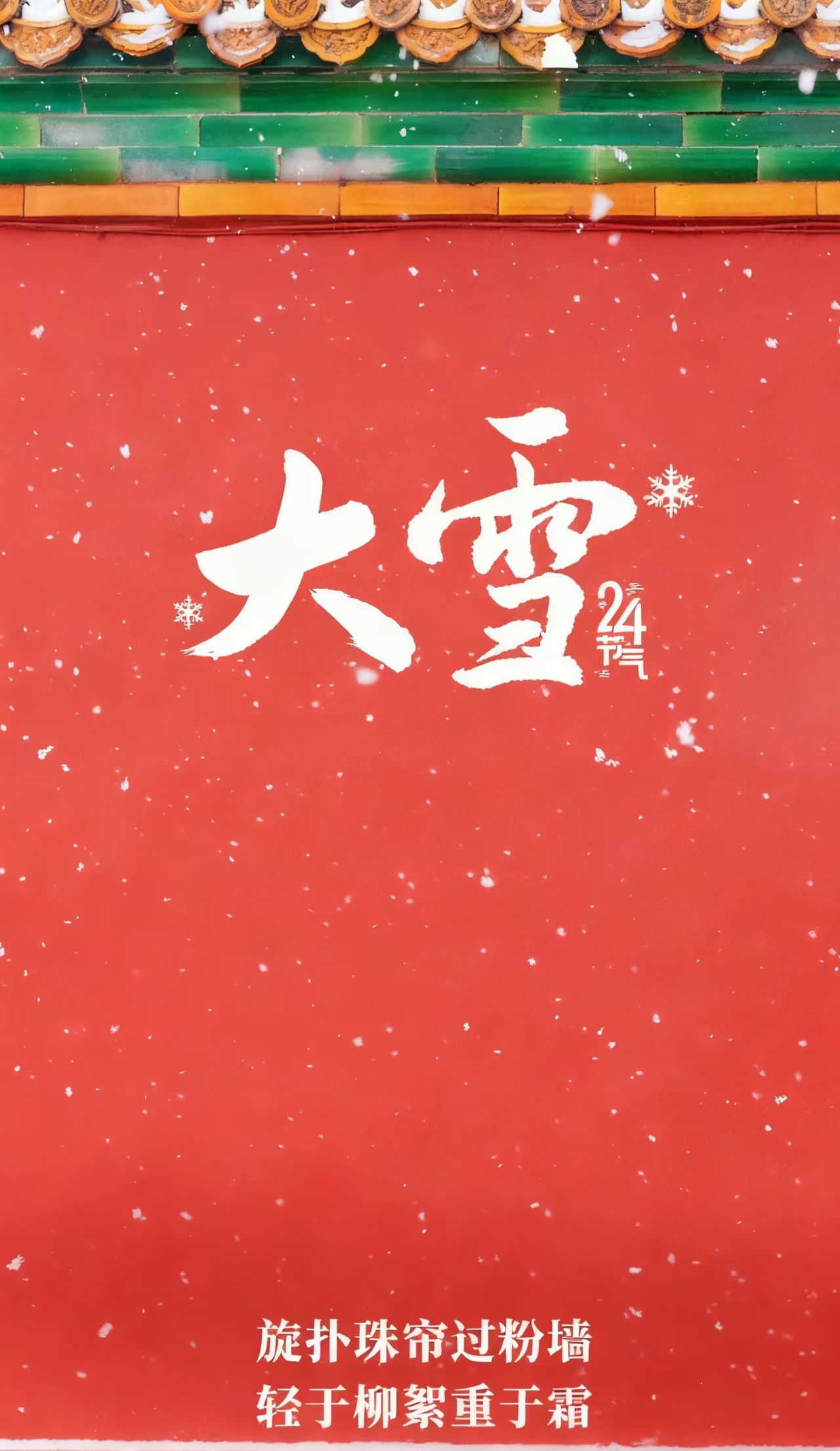
As the autumn breeze fades into a crisp chill, the 21st solar term of the Chinese lunar calendar—Daxue, or Heavy Snow—makes its grand entrance around December 7 to 8. This term isn’t just a signal for plummeting temperatures; it marks the season when snowflakes become regular visitors, draping mountains, fields, and rooftops in a soft, white veil. Nature slows down to a gentle hush, while humans, guided by age-old wisdom, turn to warming rituals and nourishing meals to embrace the depths of winter.
Daxue’s Core: Rest, Store, and Recharge
In China’s agricultural heritage, Daxue revolves around the principle of "conservation." Up north, the land hardens under frost, and farmers have long wrapped up their harvests. They now focus on securing grain stores, mending farm tools, and ensuring livestock stay cozy in insulated sheds—all to weather the harsh cold. Down south, where snow is scarce but dampness lingers, farmers rush to shield late vegetables with straw or plastic, keeping the winter harvest on track.
Ancient Chinese culture emphasized living in harmony with the seasons. The "Huangdi Neijing," a cornerstone of traditional medicine, urges people to "conserve energy, avoid overexertion, and keep warm" during this period. This idea stems from the belief that aligning with nature’s dormancy helps preserve vitality for spring. Historically, some communities held simple ceremonies to pray for timely snow—rooted in the proverb "A heavy snow guarantees a bountiful year," as snow insulates soil and eliminates pests.
Culinary Delights: Warming Up from the Inside Out
Food takes center stage during Daxue, with every region boasting unique dishes designed to fend off cold and nourish the body. The shared goal? Turning the chill of winter into an excuse for warmth and connection.
Regional specialties add rich layers to Daxue’s culinary tapestry:
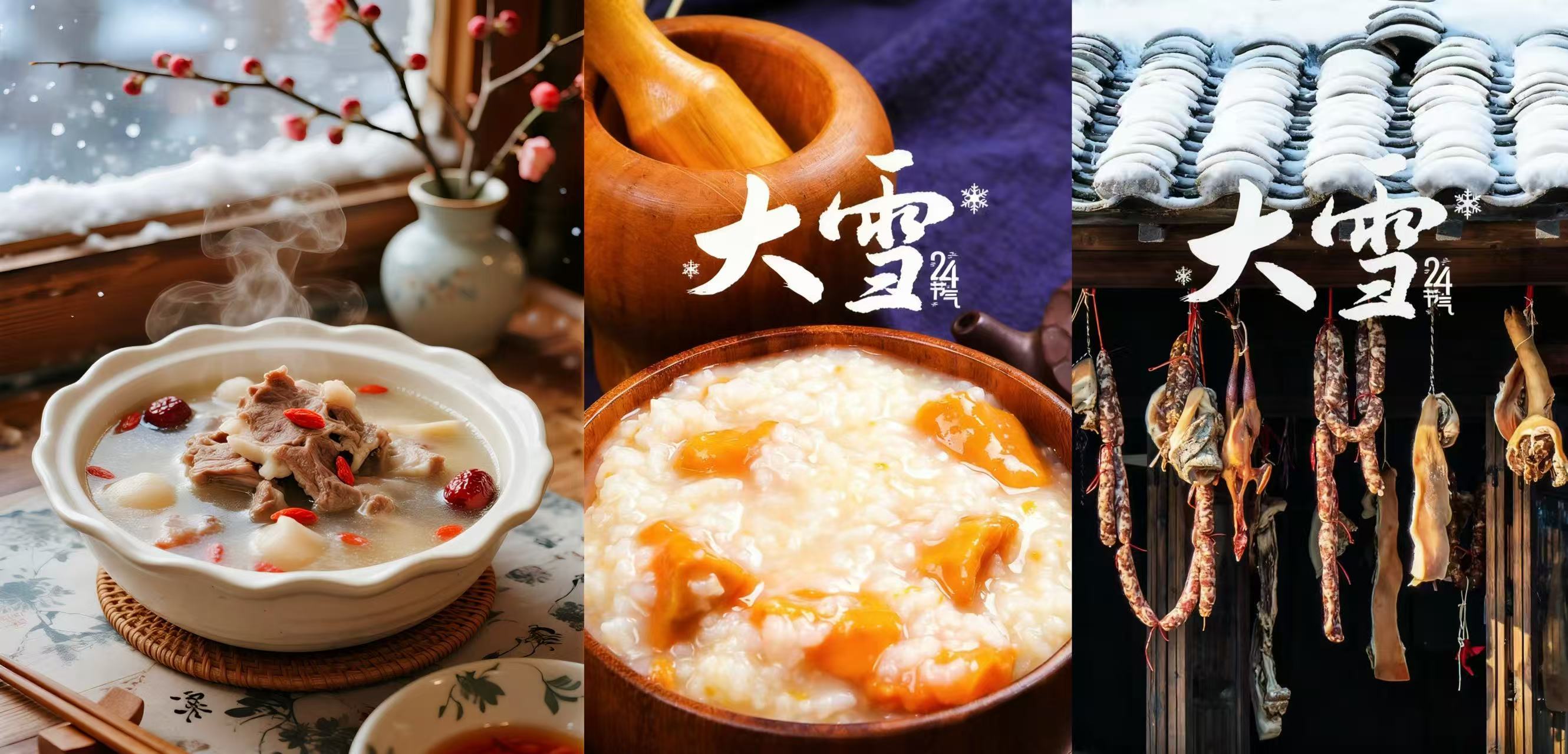
• Northern China: Mutton is the star here. In Inner Mongolia and Hebei, tender mutton simmers with radish or wolfberries in a hearty soup—believed to boost circulation and ward off cold. In Northeast China, hot pot gatherings are a must: thin slices of beef and lamb, fresh mushrooms, and vermicelli cook in spicy or clear broth, bringing loved ones closer around the table.
• Southern China: Sweet and nourishing dishes reign supreme. Guangdong families prepare "eight-treasure porridge" with glutinous rice, red beans, and dried fruits—warm, sweet, and easy to digest. Zhejiang and Jiangsu favor "osmanthus-glazed rice cakes," where chewy rice cakes soak up fragrant syrup. Sichuan’s spicy hot pot remains a staple, using chili and Sichuan pepper to cut through dampness.
• Unique Customs: In parts of Shandong, "snow noodles" are a tradition—fresh dough boiled in bone broth, symbolizing "nourishing the body for winter." In Jiangxi, autumn-preserved bacon and sausage, hung under eaves to dry, are now ready to eat, filling kitchens with savory aroma.
Modern Daxue: Tradition Meets Contemporary Life
While modern schedules have shifted how we observe Daxue, its spirit of nourishment and appreciation stays strong. The ancient advice to "sleep early and rise late" now translates to prioritizing rest amid busy workdays. Instead of farmwork, urbanites embrace winter activities—skiing in resorts, soaking in hot springs, or strolling through snow-dusted parks to breathe fresh air.
Traditional foods have also gotten a modern update: cafes serve "osmanthus rice cake lattes," and health-focused eaters add goji berries or yam to mutton soup. Colleagues often gather for hot pot after work, turning a seasonal ritual into a chance to bond.
As Daxue arrives this year, let’s take a moment to savor the season. Whether you’re sipping warm soup, watching snowflakes fall, or laughing over hot pot with friends, may this winter bring you warmth, health, and quiet joy.
Happy Daxue to all colleagues!